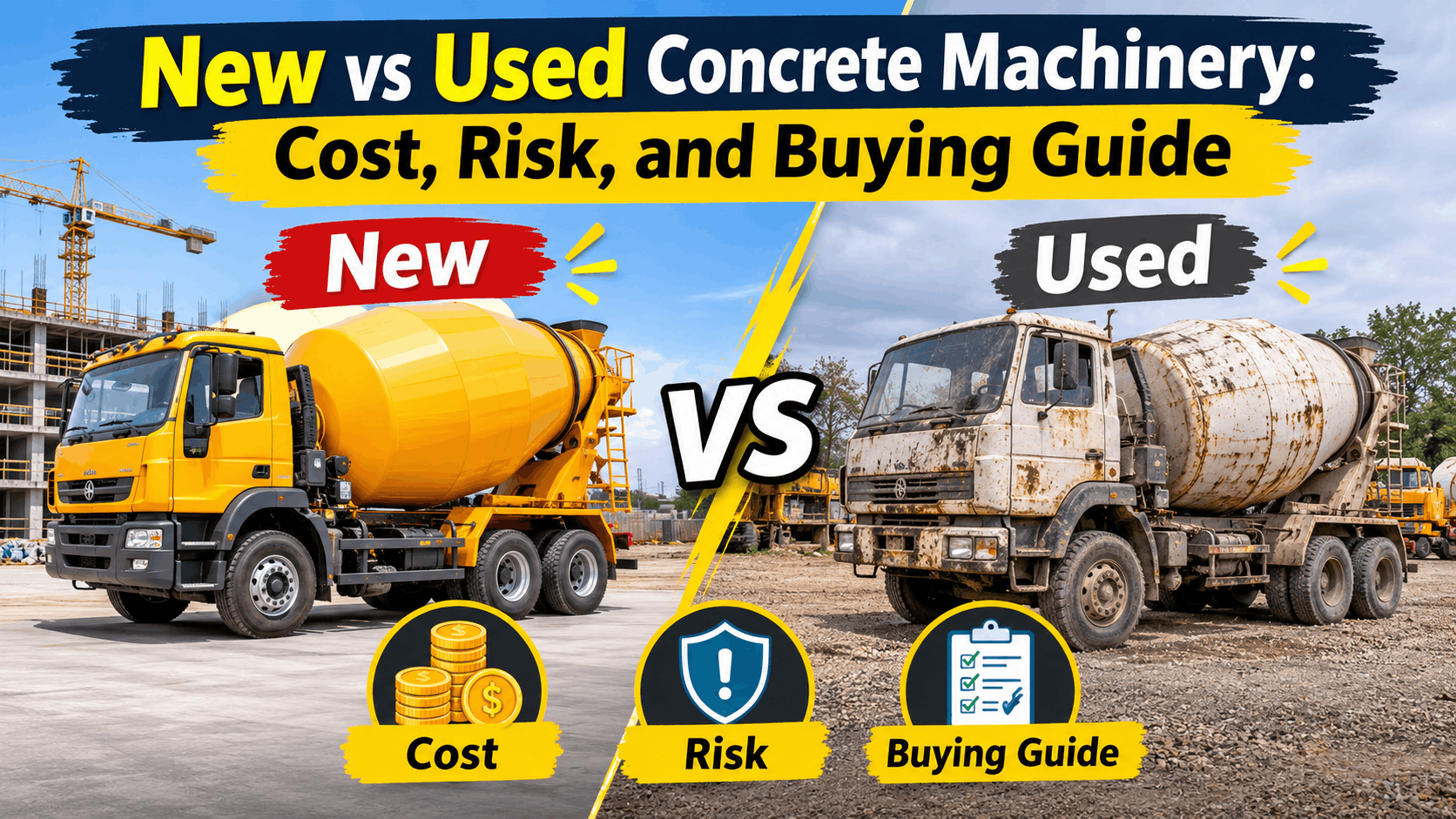


Choosing between new and used concrete machinery depends on several factors, including budget, project scale, and expected operating hours. Since every construction business has different operational requirements, there is no universal solution.
Moreover, both new and used concrete machinery options are viable, each with advantages and disadvantages. Thus, businesses should choose after understanding their project requirements, equipment usage, expected service life, and warranty needs.
This guide explores key points about new and used concrete machinery to help businesses consider every aspect, from sourcing to equipment maintenance. This helps businesses make informed decisions when choosing reliable concrete construction equipment based on their business requirements.
Businesses that want to balance cost and choose the best concrete machinery option must consider the following points before deciding:
New concrete machinery requires a high initial investment; such a large investment may not suit small companies or organizations and may strain their budgets. This leaves no room for investing in other necessary areas or tools that can improve their construction work. Moreover, newly sourced machinery is likely to depreciate heavily if used regularly for several years.
In contrast, used concrete equipment procurement helps manage the budget and reflects depreciation already incurred over time. This helps businesses preserve working capital so they can also source high-capacity equipment within the same intended budget.
Businesses should consider this factor, as the new equipment may cost a huge upfront investment with higher monthly installments. However, it can provide more durable performance for daily operations, better use of money, and longer service life depending on the chosen engine capacity and frame material. Some suppliers also provide warranty coverage that can reduce the total maintenance cost.
Used equipment may incur lower insurance costs because of its reduced replacement value, although premiums vary depending on the machine's condition and coverage. It may incur more charges for repeated repairs and maintenance due to wear and tear on used equipment components.
|
Factors |
New Concrete Machinery |
Used Concrete Machinery |
|
Upfront Cost |
High; requires significant cash or financing |
Lower; preserves cash and speeds up ROI |
|
Maintenance & Repairs |
Generally lower repair risk during initial operating years; however, routine maintenance remains necessary. Warranty coverage depends upon the manufacturer and agreed contract terms. |
Higher and less predictable maintenance; component rebuilding or upgrade may cost later in life |
|
Downtime Risk |
Low; ideal for tight operation schedules |
Moderate to high; depends on prior upkeep |
|
Technology & Compliance |
Advanced technology, fuel efficiency, and emissions standards |
Older controls; may face municipal emissions restrictions |
|
Availability |
Dependent on factory lead times |
Immediate deployment from dealer inventory |
|
Financing and Incentives |
New machinery may qualify for manufacturer-backed financing programs or equipment leasing options. Tax benefits depend on local depreciation and capital allowance regulations |
May require traditional bank loans that may offer higher interest costs over the repayment period |
Neither new nor used concrete machinery guarantees reliable performance, and each has many advantages. Each piece of equipment has its own limitations, which include:
Some common risks include the following:
New concrete machinery may offer better resale value due to its newer condition, lower operating hours, and modern features. However, the new machinery is likely to face higher initial depreciation during the first few years, which may reduce its market value compared to the original purchase price.
A well-maintained unit with proper handling is more likely to preserve its resale value. Thus, buyers should maintain their machinery and take proper care to minimize the risk and keep their equipment offering great value even after many years of usage.
New concrete machinery or customized units may need longer production lead times, as manufacturing relies heavily on component availability, raw material sourcing, and required technical specifications.
Moreover, before proceeding with a bulk order, businesses should ask for estimated delivery schedules to confirm whether they match their intended construction project requirements. A delayed shipment with non-conforming equipment can only lead to operational delays and incomplete project delivery. This can impact the overall reputation of their brand; thus, reviewing manufacturing and delivery timelines is an important factor to consider.
The following are some important risks that may occur after purchasing used concrete machinery:
Worn-out blades, hydraulic leaks, control system faults, or concrete residue buildup may indicate hidden wear and tear, which can lead to additional costs due to the need for regular maintenance. Thus, buyers should inspect the concrete machinery thoroughly. However, the inspection cannot prevent higher repair and maintenance expenses of used concrete machinery. It can only help to minimize unexpected repair expenses.
Older components are likely to suffer from wear and unexpected breakdowns. This can impact or interrupt the construction processes, delay construction schedules, and reduce the overall efficiency.
Used machinery does not include warranty terms os spare parts availability, which puts the responsibility of maintenance, replacement, or repair of parts entirely on the buyer. Moreover, equipment that has not been operated properly by previous operators also poses greater operational risks. However, some suppliers may ensure the availability of spare parts or after-sales support to help businesses complete their project within the intended timelines.
Procuring used concrete equipment may not offer advanced technology and features that can enhance the overall efficiency and operational speed while ensuring safety. This factor is important to consider since it can influence the production rate, and the equipment may not comply with regulatory standards.
When choosing between used and new concrete machinery, contractors and project managers should consider key operational and maintenance-related factors. These include:
Understand your project size or scale, required concrete volume, or output demands to choose reliable equipment. This helps buyers identify suitable concrete machinery that meets their required size, capacity, and power needs for mixers, batching plants, pumps, or screeds. Selecting the right concrete equipment, based on the intended project requirements, can help you complete projects on time without exceeding the budget.
Monitor or understand the total operating hours required to fulfill the desired projects. New concrete machinery is a favorable option if you want to perform heavy-duty work for longer hours. Used machinery is a suitable choice if you need fewer operating hours for a short time period. It also balances capital costs and helps businesses improve profit margins with lower investment.
When purchasing used concrete machinery, look for complete maintenance records and operational efficiency, and check whether the equipment has been heavily used or poorly maintained. Inspect the overall build quality and confirm that the equipment does not have any concrete buildup that can reduce its performance efficiency and production capacity. For new concrete equipment, ask the seller for the total warranty duration and which specific components are covered.
Request a trial run before placing a bulk order of concrete machinery to test whether the hydraulic pumps, wear sleeves, engines, and electronic features run smoothly. For used machinery, you can arrange a competent mechanic to conduct an inspection before purchasing.
Businesses can also confirm with the supplier whether they provide an installation guide or provide assistance with spare parts supply. Furthermore, ensure that the supplier offers technical support for your selected brand and model to minimize equipment downtime if any breakdown occurs.
Some practical sourcing methods that can help buyers find suitable concrete equipment sellers may include:
Use reliable platforms like Tradewheel.com that can provide businesses with various concrete machinery suppliers. Buyers can review a wide collection of used or new concrete machinery and send an inquiry to discuss specific requirements. Whether you want to change capacity, modify size or weight, or require specific materials, this platform can help you find a suitable supplier who can meet your business requirements.
ThomasNet is an industrial equipment sourcing B2B marketplace that buyers can use to explore various concrete machinery. Compare multiple supplier offerings, review machinery specifications, and check whether the final offer includes all the additional charges. This includes import duties, sampling or tooling, packaging, customization, and destination delivery fees, and helps you estimate your shipment cost at the time of delivery.
JumboBee is a global trading platform offering multiple heavy equipment options that buyers can use to find potential suppliers. Before placing a bulk order of concrete machinery, request equipment photos, videos, and operating demonstrations. This helps buyers understand the supplier's industry experience and whether they provide installation or after-sales support.
Bulk concrete machinery buyers can also visit relevant supplier directories such as Surplus Record or professional websites. However, before placing an order, request a trial run and verify the supplier's credentials or previous experience records.
Buyers can use trade platforms like Volza or Trademo to identify suppliers with an established trading history. This makes searching for concrete machinery suppliers easier, and you can find potential suppliers with an established export history.
Deciding that equipment is suitable just because it offers a lower initial cost.
Ignoring machine capacity and matching it with your intended project requirements.
Skipping physical inspections when purchasing used machinery.
Not confirming spare parts availability.
Neglecting the final offer and reviewing whether it includes additional charges for transportation, installation, and import expenses.
Transferring a large amount as an advance payment without verifying the supplier.
Not reviewing multiple concrete equipment supplier quotations and selecting the first appropriate offer as the suitable choice.
Thus, the decision about whether new or used concrete machinery works best for your business depends on the intended budget, project requirements, and long-term operational goals. Although used machinery suits businesses with an average budget, it may involve higher repair expenses and unexpected downtime. Purchasing used equipment requires a trial run to assess the machine's condition and production efficiency.
Before making a purchase decision, calculate the total cost of ownership, evaluate supplier reliability, and spare parts availability. Then compare multiple suppliers, check the machine's specifications, and evaluate quotations to choose the best equipment that matches their operational needs.
Is buying used concrete machinery more cost-effective than purchasing new equipment?
Neither used nor new concrete equipment can guarantee efficient performance at affordable rates. Used machinery may require a low initial investment, but frequent maintenance can balance or even exceed the planned budget. Similarly, new equipment may require a high upfront cost but does not face regular wear-and-tear issues.
What should buyers inspect before purchasing concrete machinery?
Buyers should check concrete machinery technical specifications, production capacity, build quality, operating cost, power usage, maintenance requirements, and supplier reliability before purchasing.
How can buyers calculate the total cost of owning concrete machinery?
The unit price is not the total cost of ownership. You have to consider the transportation, installation, fuel and energy consumption, maintenance or repair, labor, downtime, financing costs, and resale value.