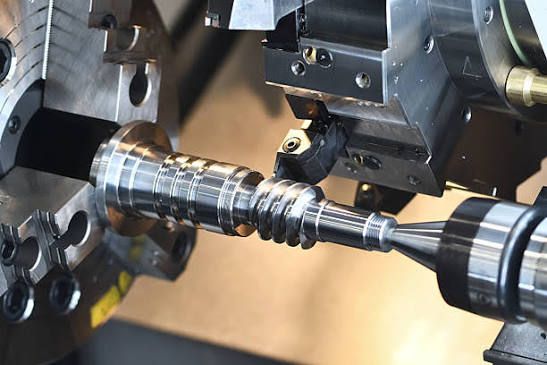


CNC machining offers accurate component production for multiple industries such as automotive, aerospace, medical equipment, electronics, and industrial machinery. However, it is important for a buyer to evaluate suppliers to prevent wrong order placement or providing inaccurate details that can result in production delays, extra costs, and compatibility issues. Thus, potential buyers should understand detailed CNC machining parts specifications before contacting multiple suppliers or requesting quotations.
A clear specification list communicates the buyer's required design, material, dimensions, and tolerances to the manufacturer clearly and helps them reach potential suppliers faster. Whether your business demands a prototype or thousands of components, this checklist includes all the essential details that bulk buyers must follow when sourcing CNC-machined parts.
Well-prepared CNC machining part specifications include all the technical details that will determine how a supplier can manufacture a component. These details not only convey the buyer's requirements but also enable the buyer to evaluate the component's quality beforehand. Thus, the buyer should add the following information in the draft before comparing prices:
Part name and intended application
Technical drawings or CAD files
Required material and suggested grade
Dimensions and dimensional tolerances
Surface finish and preferred coating material
Order quantity and expected delivery date
Quality standards and inspection requirements
These details help suppliers adjust their machining process, equipment, production time, and materials as per the request submitted by the buyers. For instance, a buyer who wants to purchase aluminum components for industrial machinery should specify the grade, dimensions, required tolerances, and surface finish that match their business requirements. Simply asking for aluminum parts does not guarantee accurate manufacturing.
Dimensions are the most important details when placing a CNC machining order because they will determine whether a component is a perfect fit for an assembly or works as intended. When reviewing CNC part dimensions, buyers should check the following measurements:
Length, width, height, diameter, thickness, hole locations, threads, angles, and radii. All measurements must be in a consistent unit system, either in millimeters or inches.
Dimensions explain the component size, whereas the tolerance creates limits on how much difference in a measurement is considered acceptable. For example, if a shaft is mentioned with a diameter of 20 mm and a ±0.05 mm tolerance, then the final range must be 19.95–20.05 mm.
However, it is important to keep the tolerance limits in check to maintain the component's functionality. Any part that needs to be fitted inside a bearing must have tighter tolerances than any external part that does not need to connect with any other components.
When specifying tolerances, consider:
Dimensional tolerances: Acceptable variations in length, width, diameter, and thickness.
Geometric tolerances: Requirements for features such as flatness, perpendicularity, concentricity, and position.
Fitting details: Explain if the two components must fit tightly, move freely, or need to connect with a defined gap.
Inspection methods: How the supplier will measure and verify critical dimensions.
It is important to note that tighter tolerances may require additional machining time, specialized equipment, and detailed inspection; thus, buyers should avoid asking for high accuracy unless it is actually necessary for the application.
Material selection is important because it determines the strength, weight, corrosion resistance, and overall cost of a component. Thus, buyers should select a material that fits the actual purpose rather than just focusing on the price alone. Some important materials that can be used for CNC machining parts include:
Aluminum, stainless steel, brass, titanium, and engineering plastics (such as POM, nylon, and PEEK for low weight, electrical insulation, or chemical resistance depending on the grade)
What should buyers include in material specifications?
It is necessary to specify the exact material grade wherever possible and confirm the following:
Corrosion or chemical exposure requirements
Operating temperature
Material certification or traceability requirements
Any restrictions on substitute materials
Surface finish tells about the surface condition and texture of a machined part. It is important because it affects the appearance, friction, sealing, and how the component interacts with other parts. Buyers must clearly state if they require additional finishing, such as
Polishing: Creates a smoother, shinier, or more reflective surface.
Anodizing: Used mostly on aluminum to provide maximum surface protection.
Powder coating: Adds a protective and decorative coating layer.
Plating: Offers a metal coating to improve corrosion resistance or electrical performance.
Deburring: Removes sharp edges and unwanted material left after machining.
If your business allows component surface roughness to some extent, then specify a measurable requirement, such as an Ra value. If the equipment needs some changes, then clarify the exact area that demands finishing and check whether the coating thickness is compatible with the critical dimensions or assembly fit.
Technical drawings and CAD files help manufacturers understand what their final component should look like. A 2D drawing typically defines dimensions, tolerances, material requirements, surface finish, and other manufacturing details. A 3D CAD model explains the CNC machining component's shape and features in greater detail, especially in the case of complex parts.
Before sending files, buyers should check that:
All critical dimensions are clearly labeled.
The drawing and 3D model match.
Units and tolerances are identified.
Material and finishing requirements are included.
The files represent the latest approved design revision.
Use STEP and IGES to provide 3D geometry measurements and design, and use DXF for suitable 2D drawings. It is important for the buyers to ask the suppliers to review the complex parts design first and help suppliers discuss changes through RFQ if the buyer is open to suggestions.
If the design is fixed, the supplier should quote a price for the drawings and limit the risk that may arise when bringing the desired component to life or making changes that could only reduce cost without affecting the functionality.
Quality inspection steps are included here when industrial businesses want to verify if the component meets their desired requirements. But it is important to note that a supplier’s general quality certification does not guarantee that the equipment is suitable for the work it has been designed for.
Buyers should ask for quality management certifications like ISO 9001, AS9100 for aerospace work, and ISO 13485 for medical device manufacturing, material verification lab reports, or other certifications applicable in their destination country.
The order quantity and delivery timelines impact the overall manufacturing process and production planning for wholesale businesses. Thus, buyers should specify the desired order quantity and also specify whether they need prototype parts, a small production run, or large recurring orders. They need to confirm the following details before developing business relations with the supplier.
MOQ
Prototype or sample availability for quality testing
Unit price at different order quantities
Tooling and setup charges
Lead times and delivery schedule
Packaging and shipment method
Discounts in rates for repeat purchases
Design revision procedures and charges if any issue arises with the shipment.
Use this final checklist to ensure that the supplier has enough information regarding your requirements before asking for quotations.
Part drawing and approved CAD files
Exact material grade and applicable certification request
Complete dimensions with accurate measurement tolerances and surface finishes
Applicable Inspection records
Order quantity and sample requirements
Final delivery date with exact delivery location
Businesses looking for CNC machining suppliers can explore sourcing platforms such as Tradewheel.com and ThomasNet, as well as manufacturing services such as Xometry. These platforms help buyers compare multiple suppliers' offers and find a suitable partner for recurring trades that not only offer attractive rates but also show positive customer feedback with on-time delivery and after-sales support.
This guide has covered key specifications bulk buyers should consider when sourcing CNC-machined parts. This includes a clear understanding of business requirements, documenting requirements in written form, checking suppliers' capability to fulfill repeat purchases, and ensuring that the parts are in compliance with quality control standards. Thus, knowing the CNC machining parts specifications will not only minimize miscommunications, quality issues, or the need to redesign. But they also ensure the businesses will get the desired components they have pictured in their mind to run their business operations efficiently.
What specifications should buyers check for CNC machining parts?
Buyers should review the material grade, dimensions, tolerances, surface finish, quality documentation, samples, technical drawings, order quantity, and estimated delivery time before placing a bulk order.
How can buyers evaluate multiple suppliers to find a potential supplier for lasting business?
Once the buyers have their specifications clear, they can compare multiple suppliers after reviewing their export history, customer reviews, sample provision, and reliable delivery terms. They can also check for supplier credibility and whether they have produced a similar component design closer to their requirements, as this allows minimal errors.
How quickly can a buyer request a quote?
It is better to first understand your component requirements before asking for a quotation cause it will guarantee better component manufacturing with greater compatibility and reduce overall shipment cost.